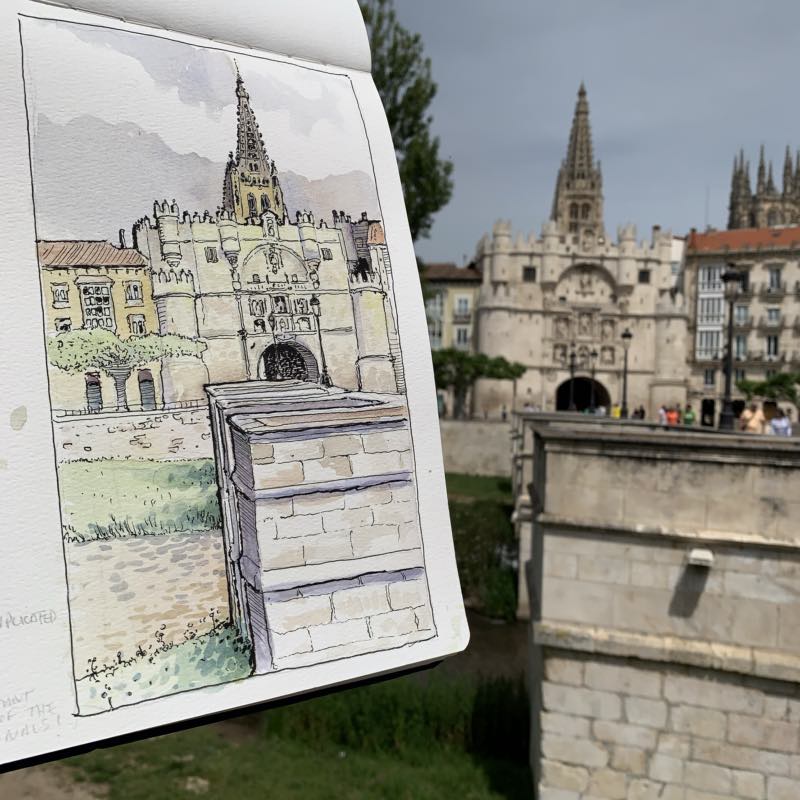
Above: Watercolor Sketching in Burgos, Spain
I did it again! After my first Camino de Santiago in April 2022, which I ended up finishing on a bicycle due to injury, I came back in April 2024 and walked approximately 800 kilometers (500 miles) on the Camino Frances route and completed it for the second time. And of course, I did some sketching…
The first bicycle Camino was a good experience. But the second walking experience was much more enjoyable and profound. There is something about the “smell every rose” pace of my walking pilgrimage that was superior.
If you’re not familiar with the Camino de Santiago, it’s a series of historic Catholic pilgrimage routes in Spain culminating in the city of Santiago de Compostella. At the end of this article, there’s some detailed information about it and how to do it.
I can hardly believe it’s taking me so long to put this second article up. It’s been more than two years since I actually did this walk. So here we are! Hope you enjoy it.
Camino art book: I’m putting together book of the artwork I created while walking the Camino. If you’d like to hear about it when it’s ready, please subscribe to this blog or follow me on social media.
The 40+ days I spent walking felt much more like a pilgrimage than the bicycle version. It was slower. I had more time to think. I talked to a lot of people. Stuck my head in churches. Made some friends.
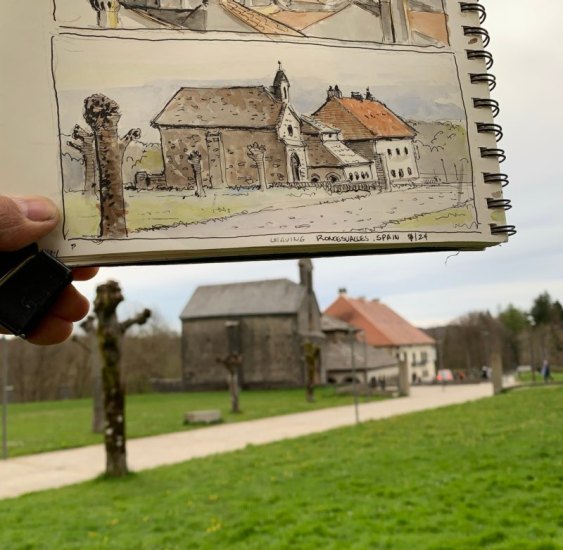
Watercolor sketching in Roncevalles,
Spain on my second camino morning.
I’m not sure I changed that much over the course of my pilgrimage. Perhaps I came out of this experience more determined to aim for the life I want. Maybe also more aware of the person I really am. And also pleased I finally finished something I have been thinking about since the mid 1990s when I first read about the Camino.
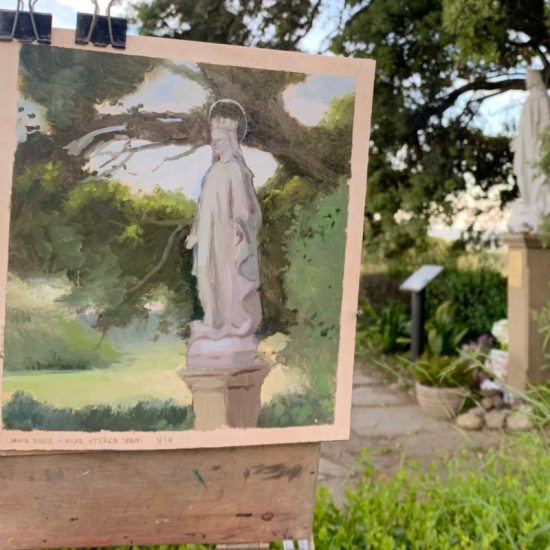
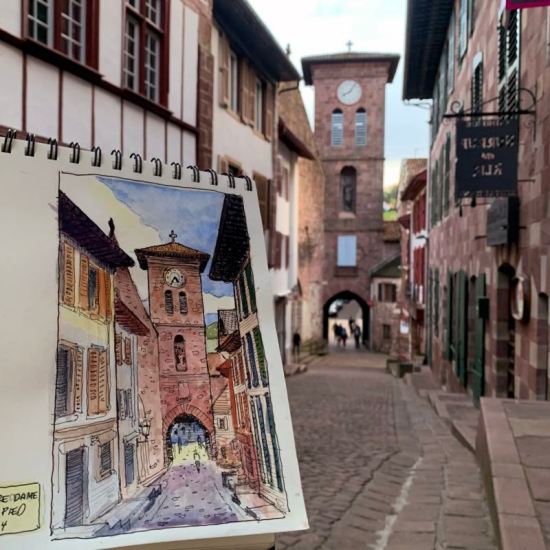
To start the 2024 Camino, I took trains and a bus from Salamanca, Spain (where I had spent Easter) to St. Jean de Pied de Port, France. This is a traditional starting point of the complete Camino Frances route.
I started April 4, which was the week after Easter in 2024. This is usually an early time of year to start and I expected it to be less busy. But unfortunately, a lot of other people had the same idea, so there was a bit of a wave of pilgrims and finding beds was fraught.
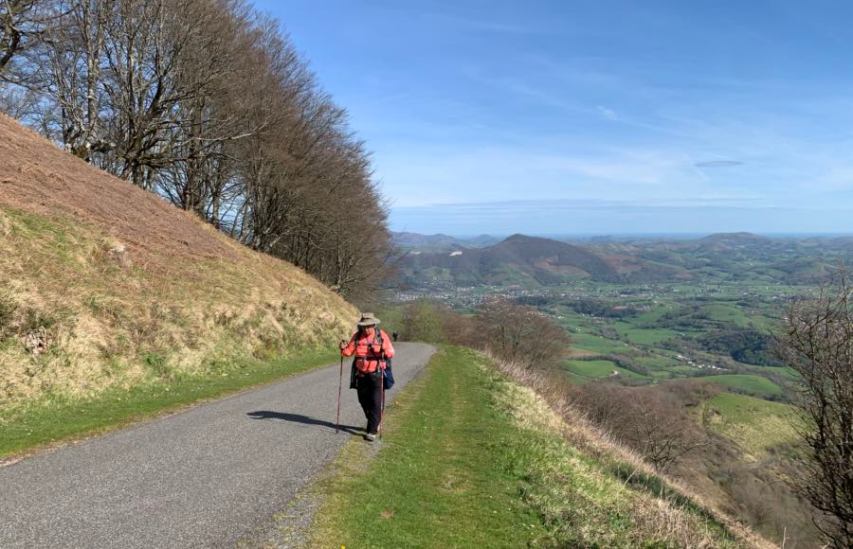
After a wait in a panicky line to get a bunk in the municipal Albergue (hostel) the first night, I started my journey across the Pyrene mountains. This first stage is called the Napoleon route, and is closed in the winter from November 1 until April 1, and then weather permitting.
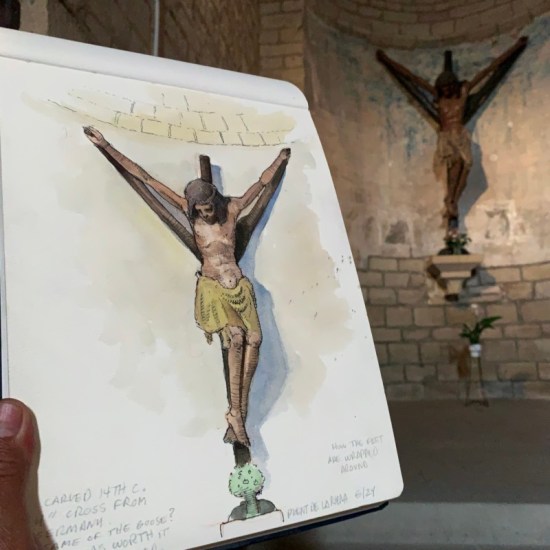
The mountain pass had been closed the day before due to a snowstorm, but lucky for me, it was open the day I left. I was a slow walker by Camino standards, and only made it the 26 km (16 Miles) to the first stop of Roncevalles late where luckily I had a reservation because the 250 beds were sold out.
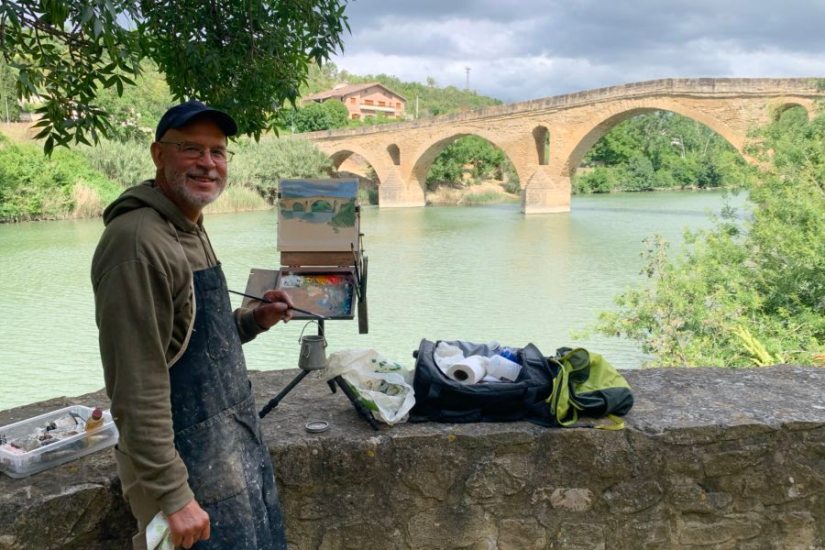
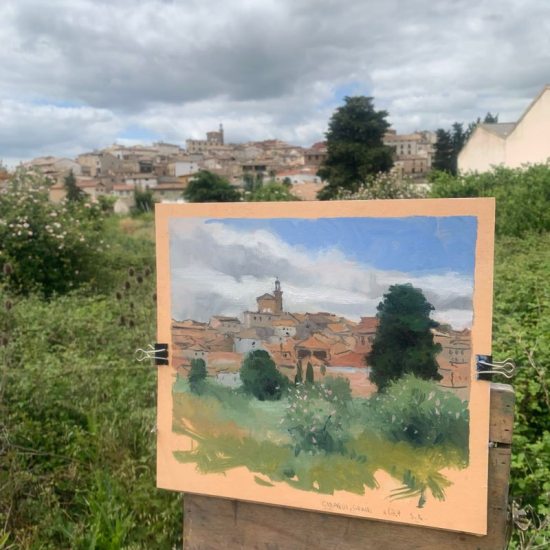
The busyness of that first day became a theme that lasted the first 10 days of the Camino until walkers spread out enough. The perceived lack of beds is called the “bed race,” on the Camino. This leads to people waking up ever earlier to be one of the first to arrive, or making reservations in advance.
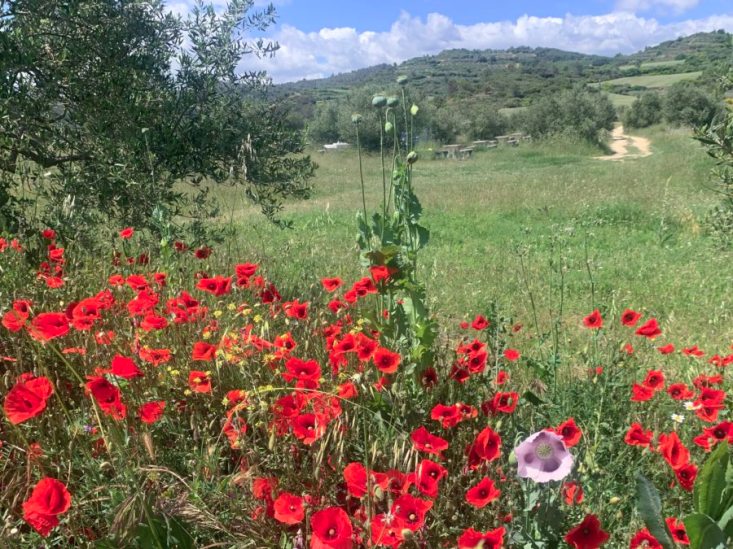
The first 10 or 12 days I was trying to book a bed every night in advance. I got so sick of doing this, that eventually I just decided to show up. There’s a certain number of albergues (hostels) to stay in called “municipals” that don’t take reservations. I often ended up with a top bunk because I’m a slow walker, but I had a place to sleep every night.
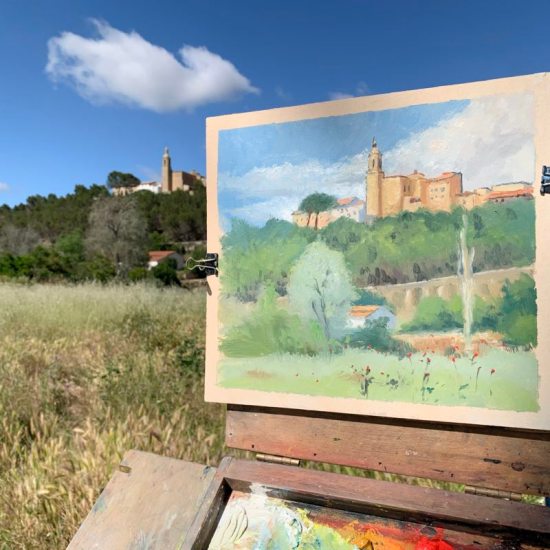
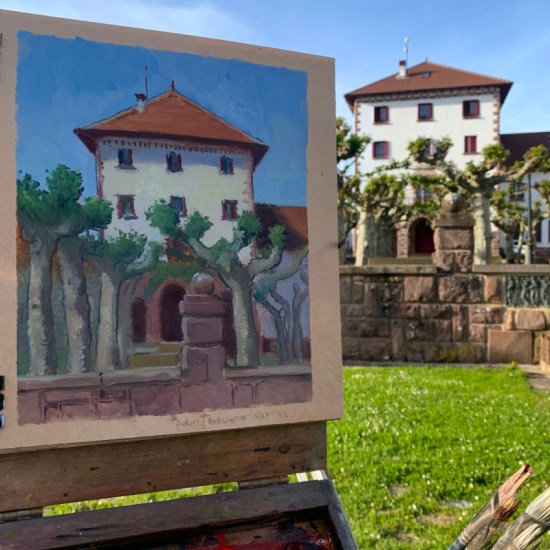
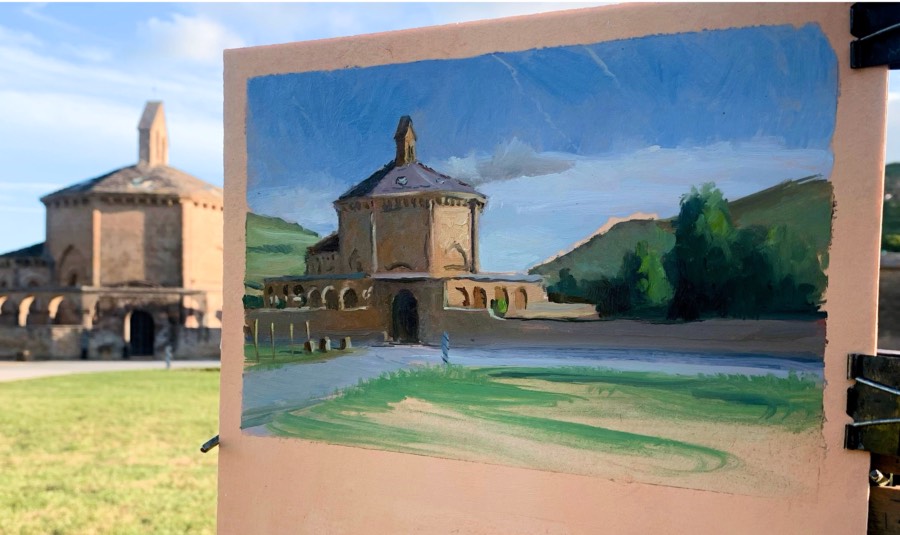
Note: Some of the watercolors or drawings were done while I was walking, but all the oil paintings were done afterwards. The oil painting equipment is much too heavy to carry on your back and I rented a car after I finished walking the Camino and went back to my favorite locations.
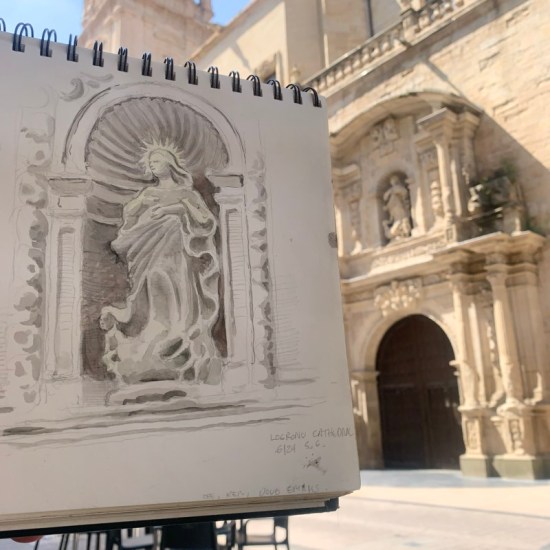
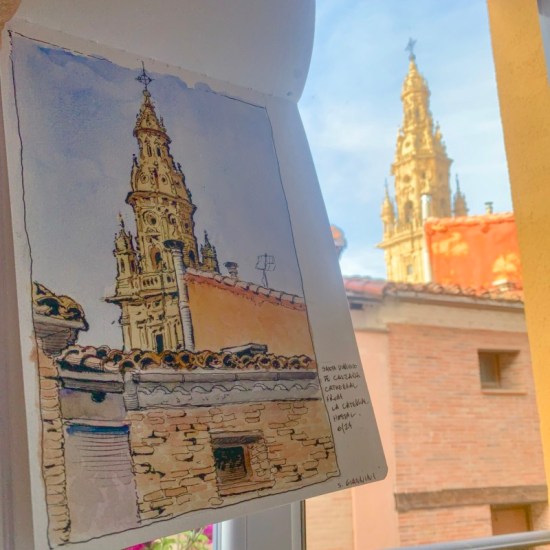
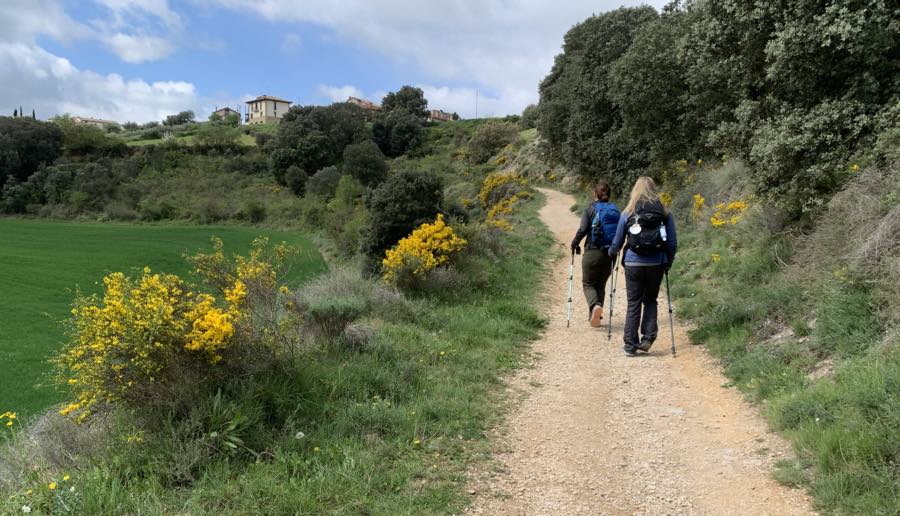
Once I got started after that initial long day, I walked as short days as possible. I was worried about injuring myself again. Some of those early days were as short as 10 or 15 km. But by the end of my 40+ days of walking, as my stamina increased, I could easily walk 35 km. (22 miles).
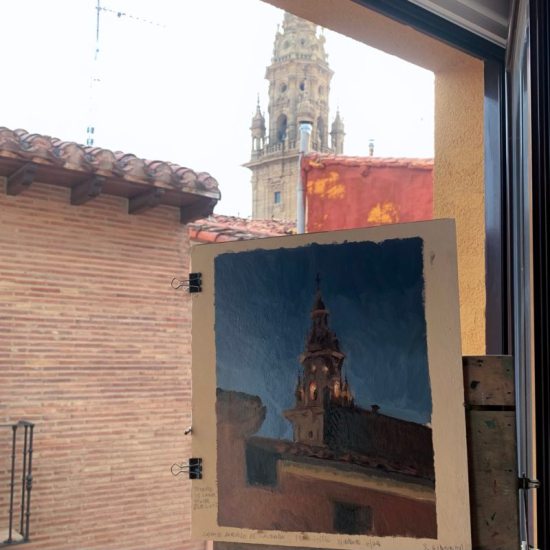
It was my goal to do daily sketching, although I didn’t come anywhere near that. At first, I had more energy for it. But towards the end, I was only doing it every few days.
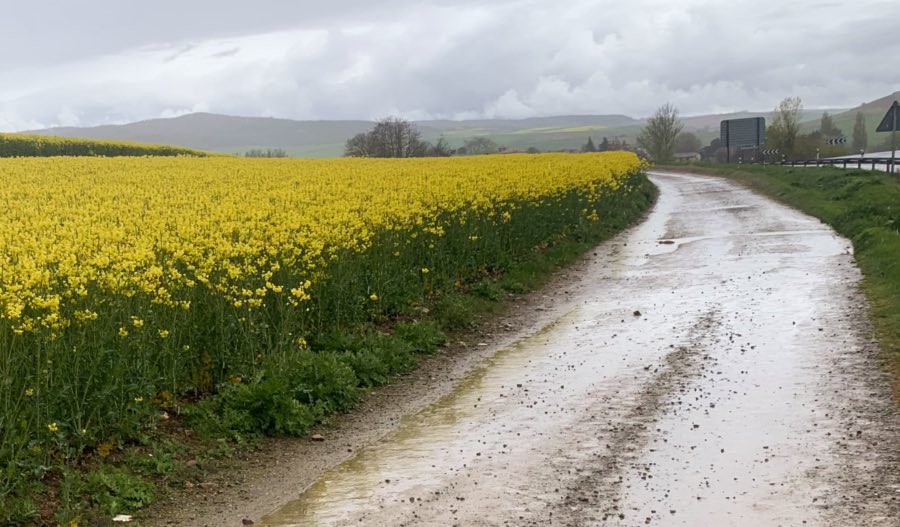
After about 15 days of walking to Burgos, Spain, I shipped the watercolor equipment 10 walking days ahead to Leon because I was really trying to cut back weight in my backpack. When I picked it up, I decided I missed it too much and kept it for the rest of the Camino.
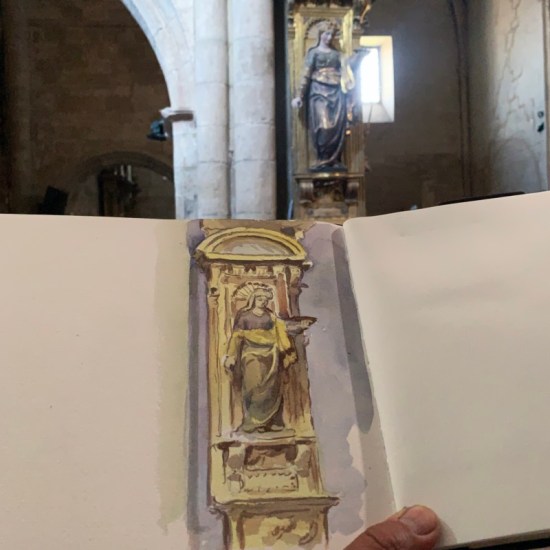
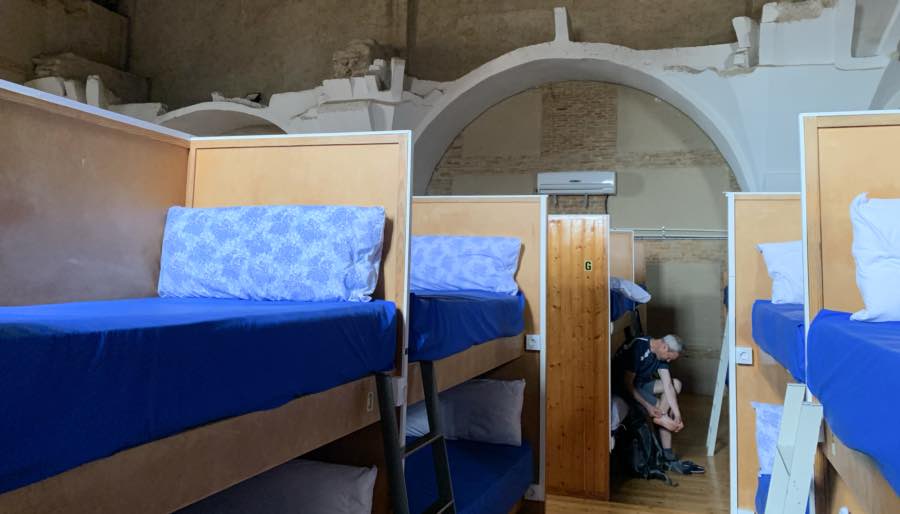
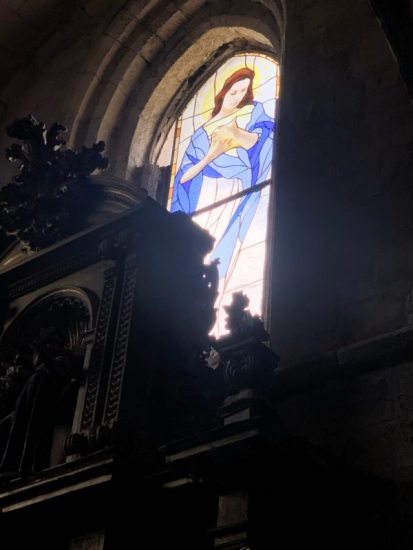
I spent about 41 days walking the Camino Frances. That included three rest and sick days. I met many people each day and made a few friends that I saw over and over again. By the end of it though, including the Camino Madrid, which I had spent seven days on right before this walk, I had walked almost 50 days. It was enough.
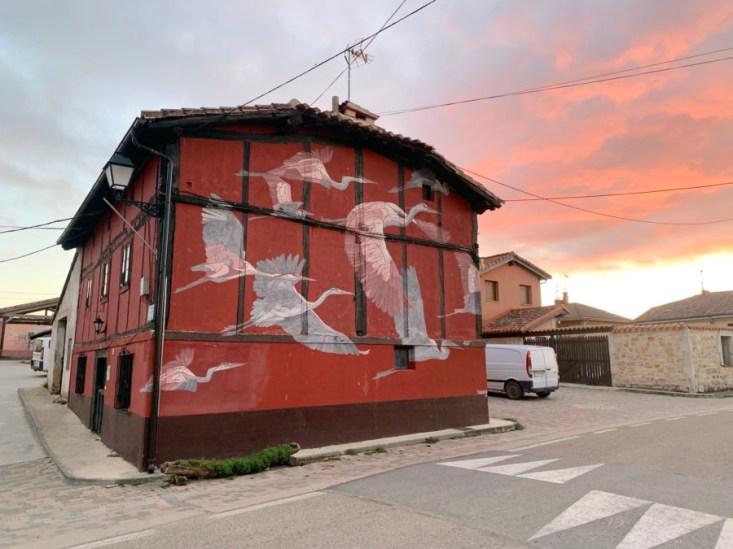
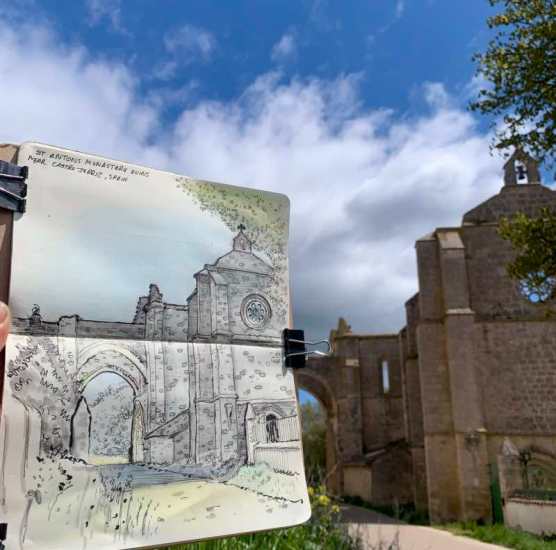
I spent about six weeks in Spain after I walked the Camino. For four of those weeks, I rented a car and traveled around sketching. It was a rainy May and June which really got in the way of productivity. I was disappointed with the quantity and quality of work I was able to accomplish.
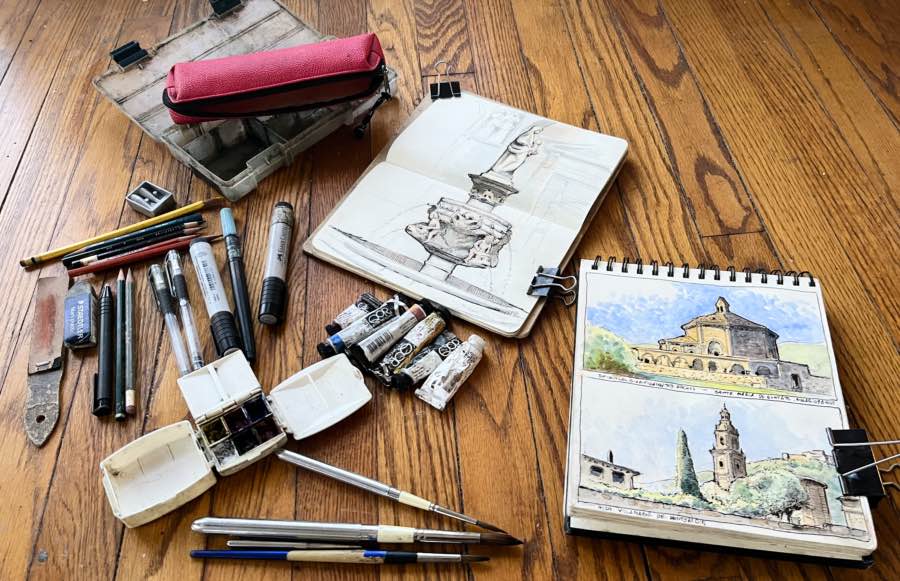
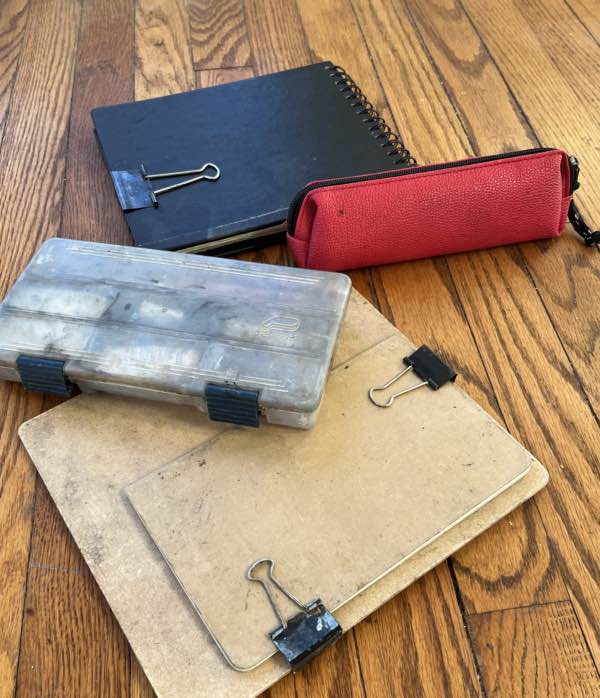
Above: This is the equipment I carried with me in my backpack while I was walking to Camino. Spread out on the left and packed in its containers on the right.
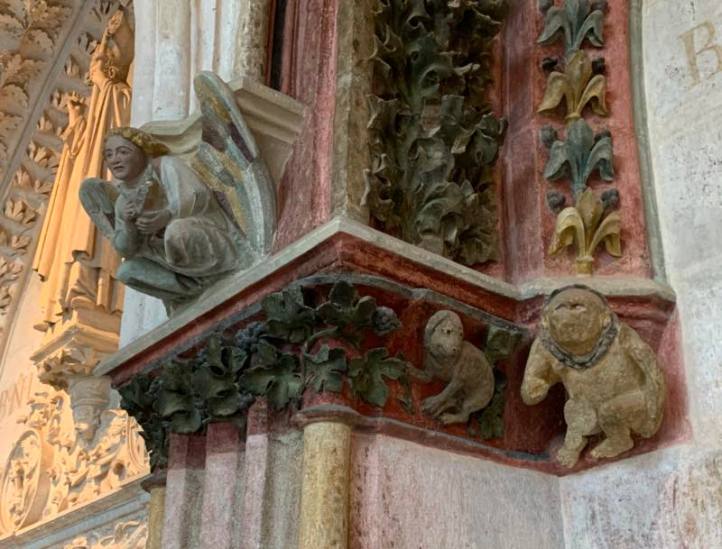
I had tried to get a SUV that I could also sleep in. Unfortunately, they didn’t have the vehicle I had requested. That would’ve made the logistics and expenses of traveling a lot easier. The vehicle I did get only cost me about $1100 for 28 days. It would’ve also been possible to rent a small camper van, but these are usually about $100 a day, and while this would’ve been the best thing to do, it was out of my budget.
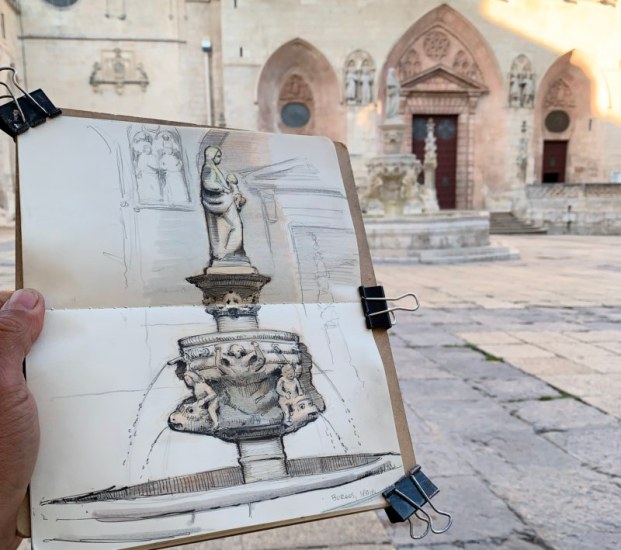
I think if I do another walking Camino, I’ll try to ruthlessly simplify the equipment I bring along. Every ounce counts. Or at least that’s what my back and shoulders tell me!
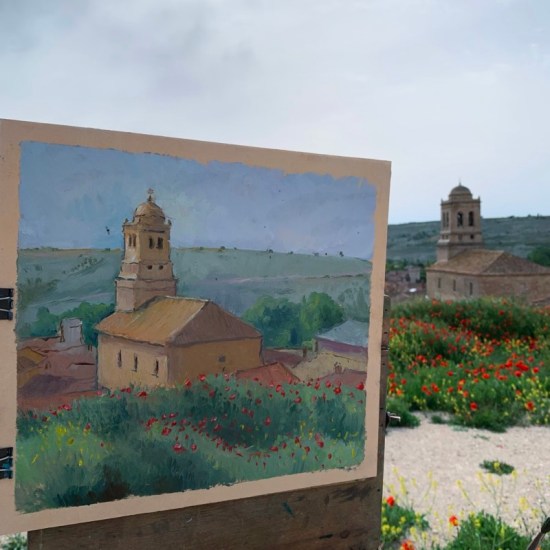
After Burgos, you enter the Meseta. This is about 10 days of very flat walking, which has a reputation for being boring. But I found it quite nice, with many of my favorite towns.
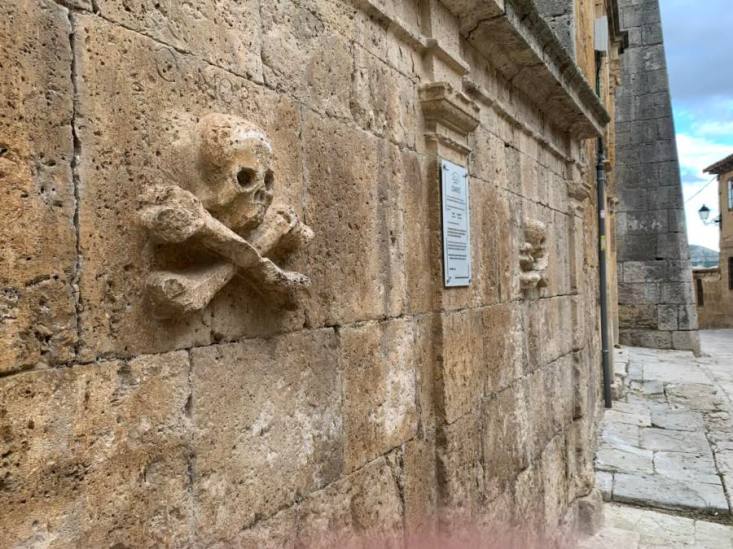
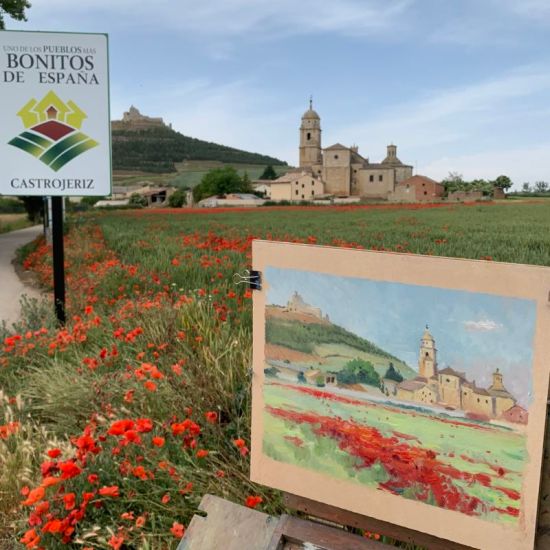
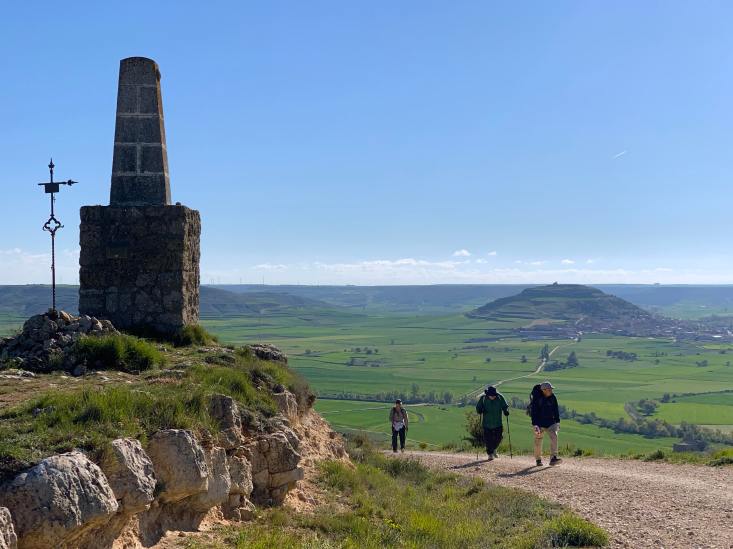
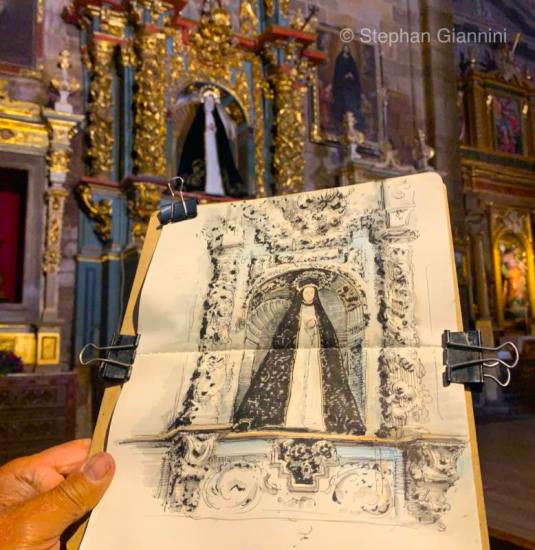
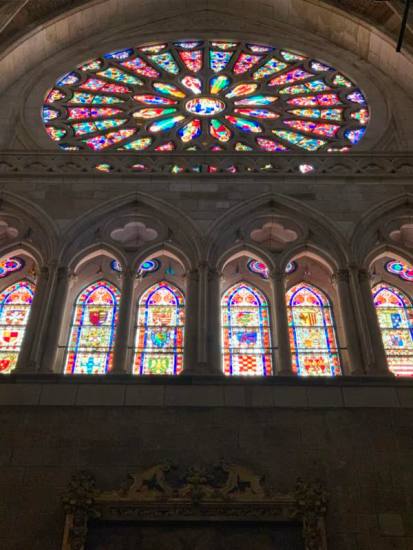
As I mentioned earlier, I didn’t carry oil paints on the Camino. Way too heavy and bulky. I shipped those ahead (along with after-Camino clothes), to a place in Santiago called Casa Ivar, who will, for a fee, store your equipment, and if necessary, ship it to you somewhere else.
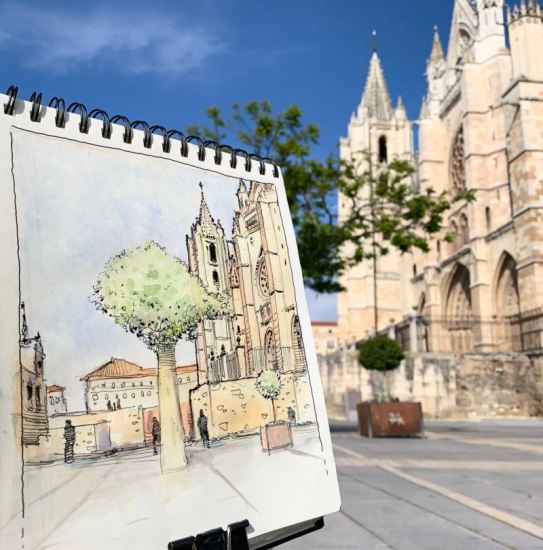
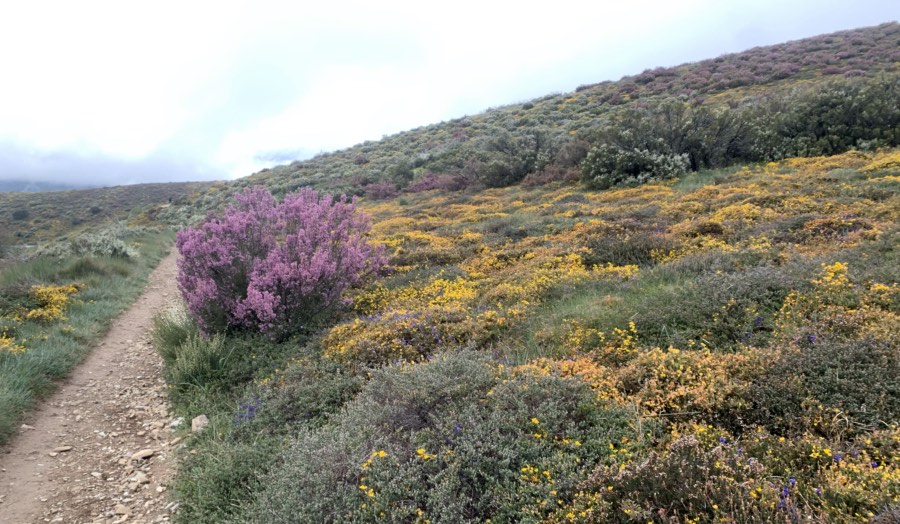
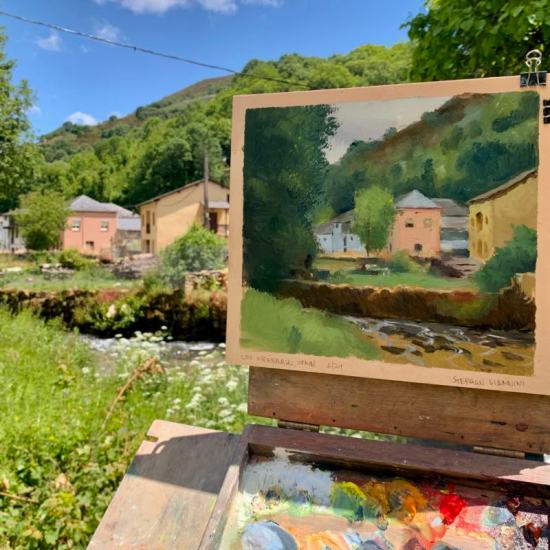
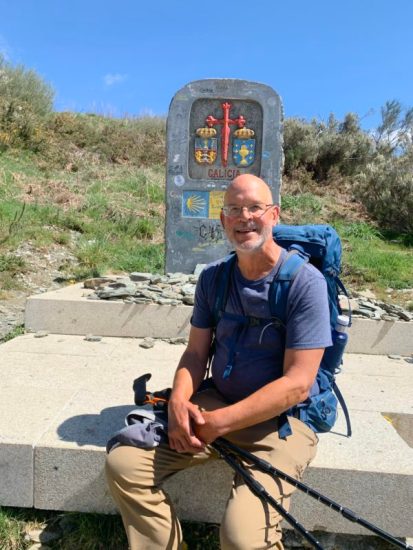
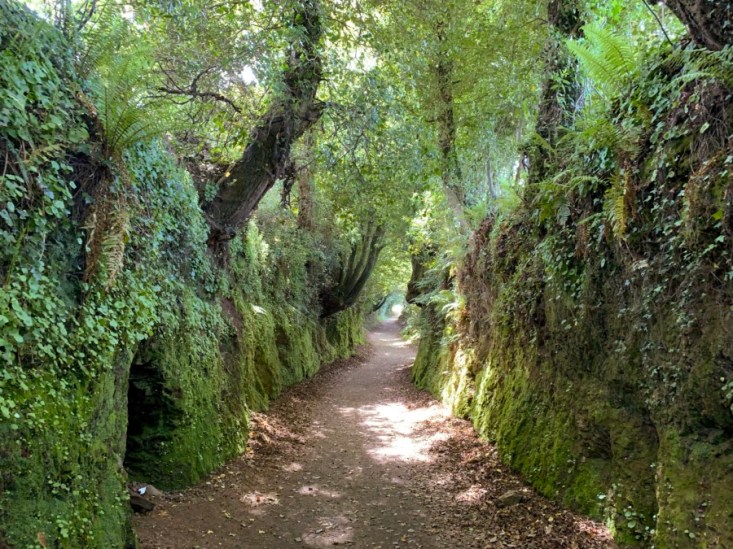
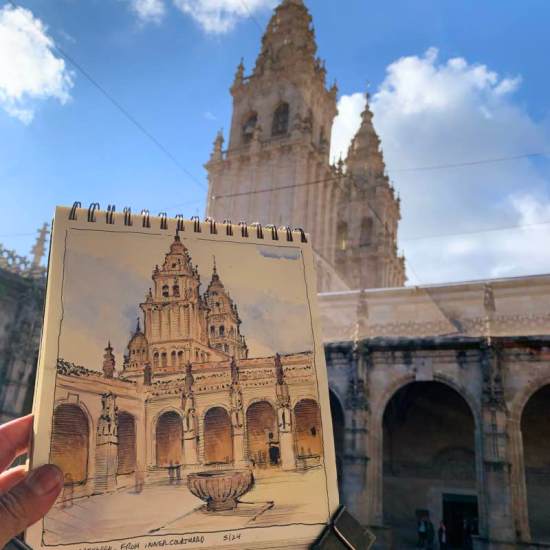
So here I am over two years later. Finally putting an article up about it. The big plan with the sketches is to create a book, and I continue to work on that. A much bigger project than I thought with many distractions in my life.
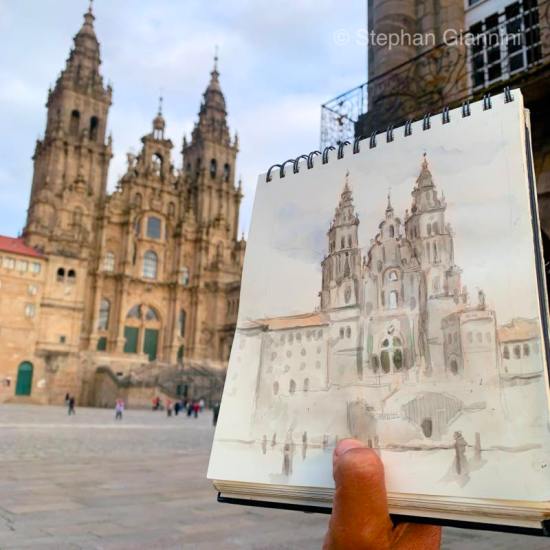
Over the last few years, I became a bit obsessed with the Camino. The very first time I heard about it in a print New York Times article. I was so fascinated about it that I hired a model and started doing paintings about it. But it took me over 20 years to actually go and do it.
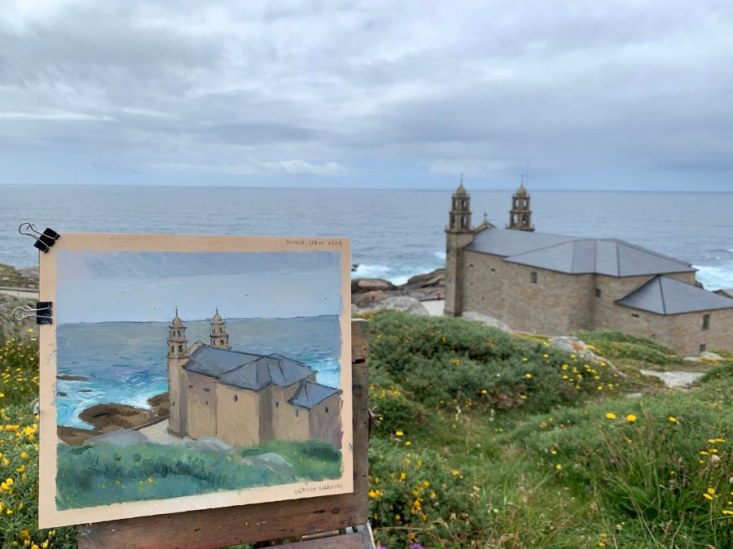
The first time I tried in 2020 I was literally booked on a plane when they shut down Spain for Covid. Two years later, I returned and did it for the first time via bicycle because of an injury that happened a couple days into my first walking attempt.
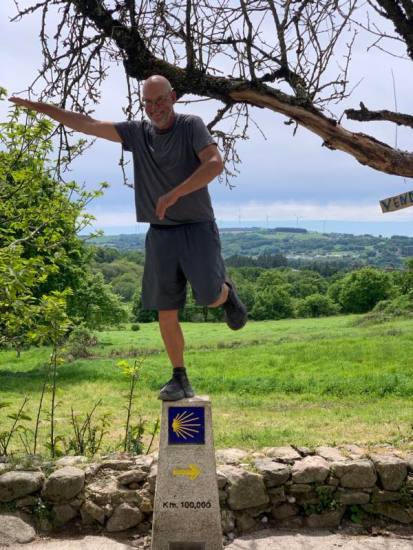
I was most fascinated with the history and the artistic possibilities of the Camino when I first heard about it. It seemed like such a great story to tell visually. I see myself as secular but while walking the Camino, I started to feel the spirituality of it. I came with no religion and left with a little.
Below: some of the many nice people I met frequently while walking the Camino
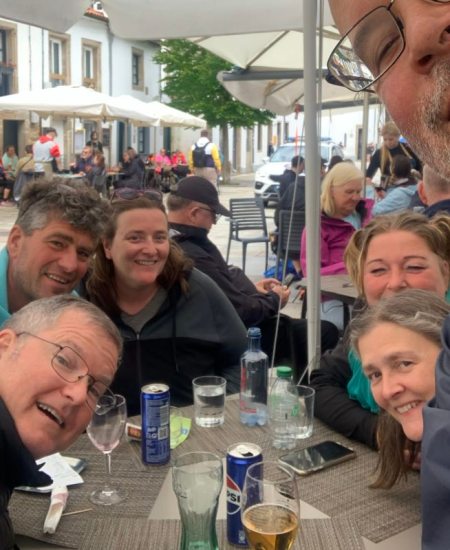
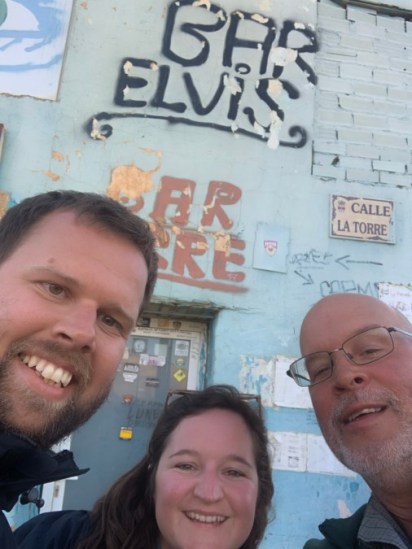
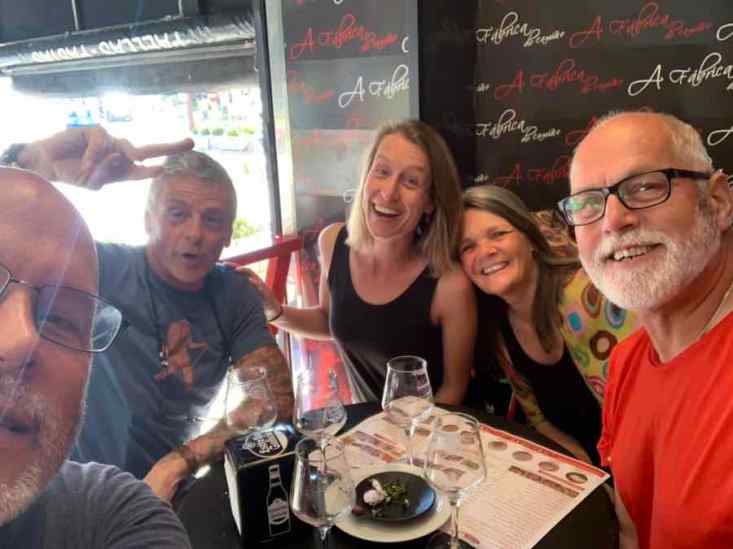
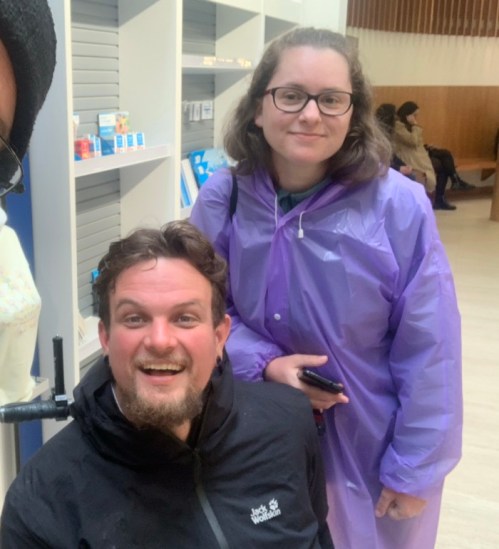
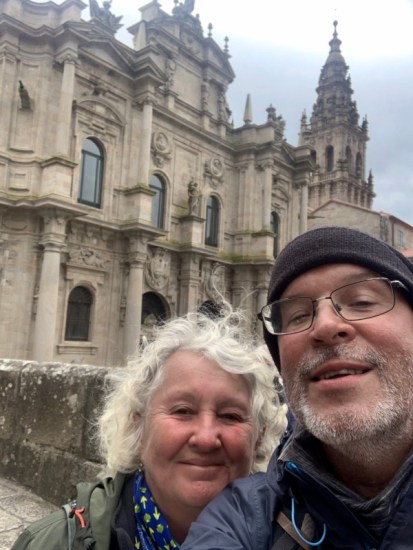
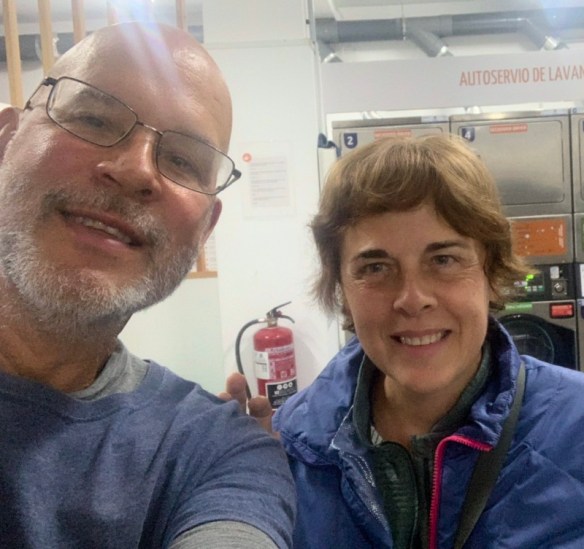
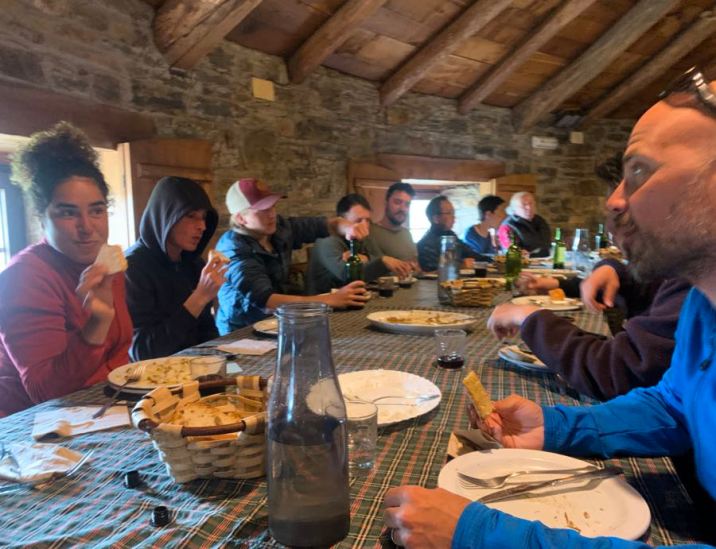
I don’t think the Camino Frances is a remarkable visual subject. There are more exciting and dramatic places to paint. The best thing about the Camino Frances is the social interactions. You meet people from all over the world with a shared mission. It’s not easy, it’s not quiet, it’s hard to sleep, it’s not as spiritual as you think it should be, but it’s really interesting.
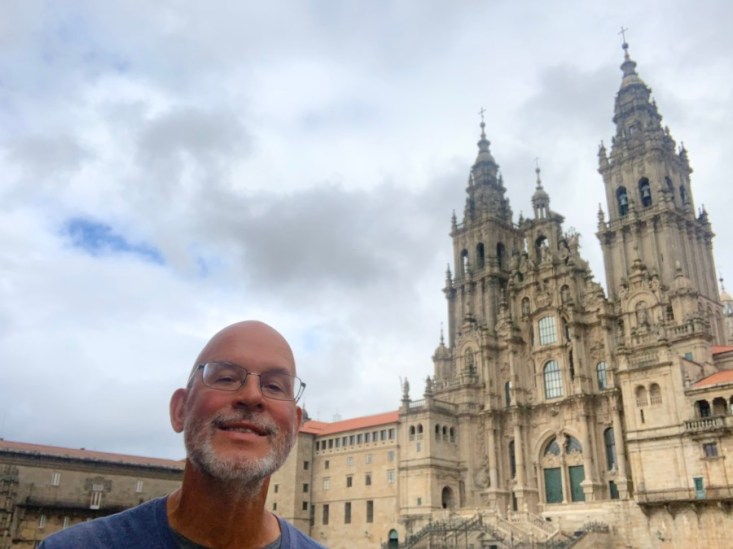
Buen Camino!
If you’d like to learn more about my first sketching Camino in 2022, click here. The shorter Camino Madrid that I did right before this walk, you can find about here. And a future post will be about the Camino Mozarabe in the south of Spain.
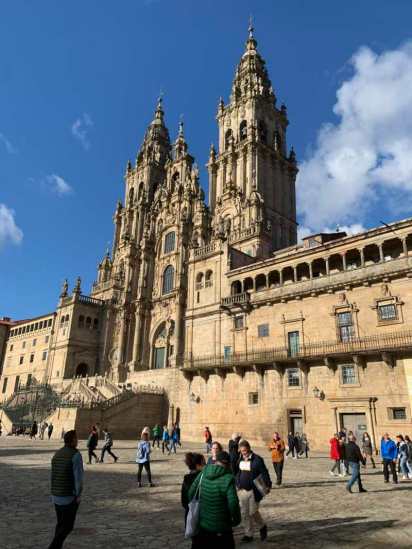
What is the Camino?
If you’re not familiar with it, the Camino de Santiago is an ancient pilgrimage route that culminates in Santiago de Compostela, Galicia, in the northeast of Spain. At the cathedral there, legend has it that the remains of Saint James, one of the apostles of Jesus, are buried. People have been doing this pilgrimage for more than 1000 years. Here’s more general information on the Camino Wikipedia page.
If you’re thinking about doing it, this Camino forum is a great resource for planning and learning. You might even find me there. What I would strongly recommend is that, if it’s physically possible, you walk it yourself, carrying your own backpack. On some of the busier routes, you can pay for luggage transport. But the sense of accomplishment, if you do it completely under your own steam, is magnificent.
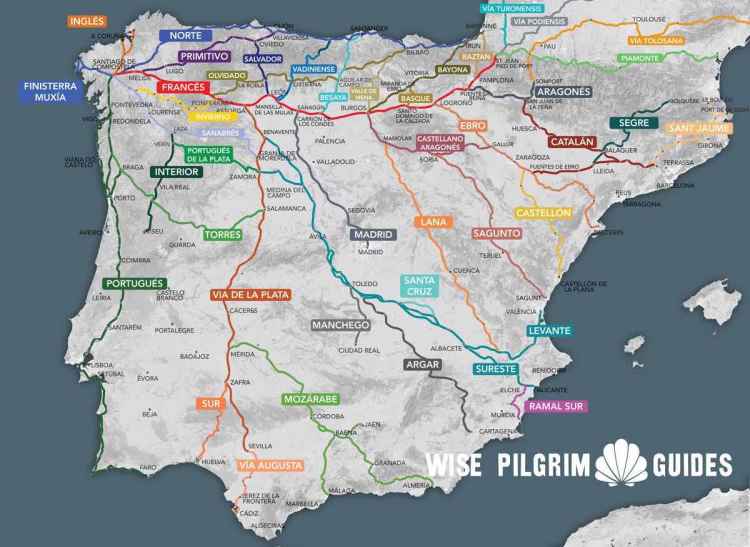
The red line in the map below the Camino Frances and is the most popular route. And the one I walked this trip. I’ve also walked parts of the Camino Madrid, and the Camino Mozarabe.
So How Does the Camino Work?
As you are traveling the route you collect stamps in a small booklet called a credential, to show that you accomplished the required distance (which is actually only 100 km). At the end, you show the booklet in the pilgrim’s office in Santiago, and then you’re awarded a compostela (certificate of completion of the pilgrimage). You can either choose a religious one, or a cultural one, depending on your purpose.
Many people walk longer distances if they have time. Some people sleep in private rooms, but most people bunk in hostel-like dormitories that are called albergues in Spain. The busier routes at busy times of year (May and September especially) are very social. You’ll meet lots of people and always have someone to eat dinner with or share a glass of wine with. Lesser-known routes or off-season walking can give you a more solitary walk.
You can keep it simple like this, or there can be a lot more variables. Hundreds of thousands of people participate in this pilgrimage each year.
Originally published on stephangiannini.com. Copyright 2026
Notifications: If you would like to receive a newsletter email when I post new paintings, news, or travel adventures, including about my upcoming Camino book, please add your email address below.
If you have any questions or see a work here or on my social media that that you’re interested in, please contact me here.
Find me on Social Media:
Or share this page. Thank you!


Hello Stephan,
Your paintings of the Camino de Santiago are great, and very inspiring! I was fortunate to walk a little of it in 2022 and have dreamed of the entire journey. Your paintings help bring me there!
I look forward to seeing more.
LikeLike
Thank You, Paul.
LikeLike